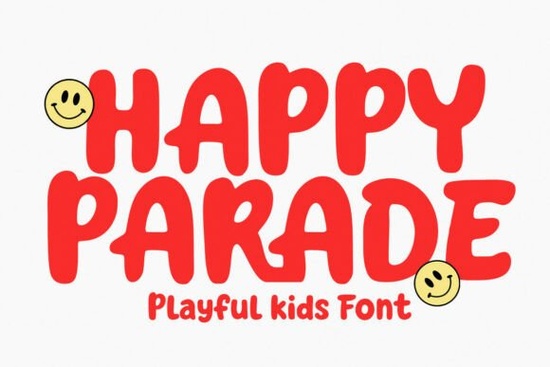
Finding the right typography for kids' projects can be tricky. You need something readable but still playful. The Happy Parade Font solves this by offering bold, large letterforms with soft, rounded edges. It is a cheerful typeface designed specifically to bring a friendly and approachable vibe to children's books, birthday invitations, and toy packaging. If you are working on a design that needs to feel imaginative and cute, this typeface gives your text the exact personality it needs.
What makes this typeface work so well for children's designs?
When designing for a younger audience, readability and visual appeal must go hand in hand. Kids are naturally drawn to bright, clear, and friendly shapes. The rounded edges and thick strokes of this font mimic the soft, safe aesthetics found in modern educational materials and nursery decor. Unlike sharp or overly complex scripts, these large letterforms are easy for early readers to recognize. This makes it an excellent choice for print-on-demand sellers creating learning flashcards, alphabet posters, or personalized storybooks. The thick lines also ensure that the ink prints smoothly on various textures without breaking apart.
While a bold, playful style is perfect for headlines, you might need different typography for other parts of your project. For instance, if you are designing a brand identity for a kids' clothing line, you could pair your main headline with a flowing alternative like this elegant handwritten option for subheadings. Alternatively, if you are working on a bakery logo and want something with a bit more weight, you might explore a bolder brush style to complement the primary text. For those who specifically want to browse more options in the same playful category, checking out the complete collection of cheerful typefaces can give you more ideas. And if your project eventually shifts toward a more mature, sophisticated aesthetic, a refined calligraphy choice might be a better fit for your secondary text.
How can small businesses and crafters use this in their products?
Crafters and small business owners constantly look for versatile assets that can be applied across multiple product lines. Because of its highly legible and fun structure, this typeface adapts easily to various physical and digital mediums.
- Apparel and Accessories: Use it for catchy slogans on toddler t-shirts, baby bibs, or canvas tote bags. The thick strokes hold up very well during screen printing and heat transfer.
- Paper Crafts: It cuts cleanly on electronic cutting machines, making it ideal for scrapbooking titles, acrylic cake toppers, and layered greeting cards.
- Digital Products: Apply it to social media templates, digital planners for teachers, or YouTube thumbnails for family-friendly channels where quick readability is essential.
- Home Decor: Print it on nursery wall art, wooden name signs, or custom ceramic mugs to add a personalized, handmade touch.
What are the best practices for pairing and spacing?
Even the most well-designed letters can look cluttered if not spaced correctly. Since the characters are naturally bold and wide, give them plenty of breathing room. Avoid squishing the words together, especially when cutting vinyl or printing on fabric. When pairing this with other fonts, stick to simple, clean sans-serif typefaces for your body copy. This creates a nice visual contrast and ensures your main message stands out without overwhelming the reader.
If you want to see more examples of how Happy Parade Font looks in real-world applications, reviewing community design galleries can provide great inspiration for your next layout.
What should you check before exporting your final design?
Before you send your file to the printer or cut your vinyl, run through this quick checklist to ensure your typography looks its best:
- Check the kerning: Manually adjust the space between specific letter pairs if they look too far apart or too cramped at larger sizes.
- Test the scale: Print a small test page on regular paper to see how the thick strokes hold up at your intended physical size.
- Verify the contrast: Ensure your text color stands out clearly against the background, especially for early readers who need high contrast to recognize the shapes.
- Outline your text: If you are sending the file to a commercial printer or cutting machine, convert your text to outlines so the formatting stays perfectly intact.
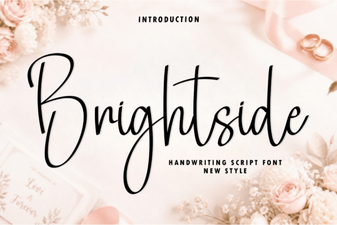 Brightside Font for Creative Projects and Design
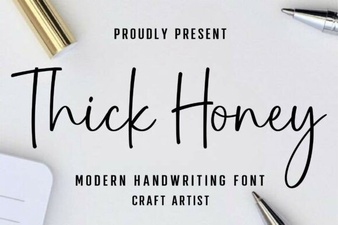 Thick Honey Font Design Styles and Download Guide
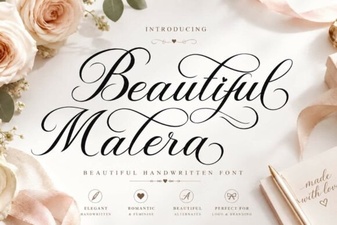 Beautiful Malera Font for Creative Projects
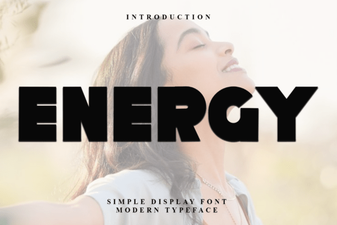 Creative Project Ideas Using Energy Font
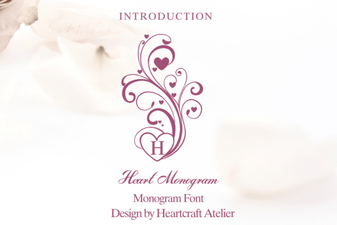 Sweetheart Monograms: Fonts for Custom Gifts
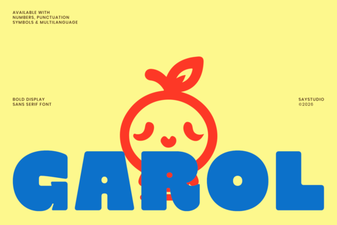 The Garol Font: Creative Uses for Your Design Projects